Background
The serendipitous discovery by Barnett Rosenberg that cis-diamminedichloroplatinum(II), more commonly known as cisplatin, can inhibit the tumour growth heralded a new era of cancer research based on metallopharmaceuticals. To date, cisplatin and its analogues are some of the most effective chemotherapeutic agents in clinical use and are used against a variety of malignancies including, colorectal, lung, testicular and ovarian cancers. The anticancer properties of this simple inorganic compound are remarkable, particularly against testicular cancer.
Prior to the introduction of cisplatin, testicular cancer was a deadly disease for men with high mortality rates of approximately 70%. Platinum-based chemotherapy has dramatically reversed this trend, with curative rates exceeding 90% in early stage cases. Carboplatin is a second-generation platinum drug against a similar spectrum of cancers but with lower toxicities. Oxaliplatin was approved for clinical use as recently as 2003 and used in combination with 5-fluorouracil against advanced metastatic colorectal cancers.
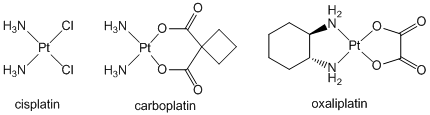
FDA-approved Platinum(II) Anticancer Drugs
The cytotoxic action of these compounds requires a combination of processes including cell entry, drug activation, DNA binding and cellular responses. Upon cell entry, the platinum drugs are activated by aquation and bind nuclear DNA. Formation of platinated DNA adducts lead to arrest of key cellular functions, such as transcription, and triggers a variety of cellular responses, such as repair. However, several challenges in the clinical application of these platinum-based chemotherapies remain, including their high toxicity, severe side-effects and incidence of drug resistance.
Over the past decades, tremendous amounts of resources have been invested into uncovering new platinum drugs for chemotherapy, but there have only been only few successes. This is partly due to the incomplete understanding of the mechanism of action of platinum(II)-based drugs and the reliance on conventional drug screening approaches for drug discovery.
In the past two decades, tremendous strides have been made towards understanding platinum(II)-based drugs including the development of new delivery strategies and structures. The picture is not quite complete and there are still gaps in our understanding into the mechanism of action of platinum drugs. There is also increased interest in new chemotherapeutic agents based on other metal centres with the ongoing clinical evaluation of the two ruthenium complexes leading the way.
Interests
Our research interest lies at the interface of chemistry and biology, in the study and development of metallopharmaceuticals for cancer therapy. We are currently exploring alternative chemotherapeutic strategies and analytical tools to develop metal complexes as viable chemotherapeutic agents.
The key thrust of our work includes:
- Functionalized platinum(IV) anticancer compounds
- Functionalized organometallic ruthenium scaffolds
- Analytical tools for investigating metallodrugs
Inside

Loading content... Please wait a moment.

Explore
About
Resources
Quick Access
Site (v3.0) designed by Nicholas Ang.
Copyright © Dr. Ang Wee Han 2010.